
Introduction – Why This News Matters Now
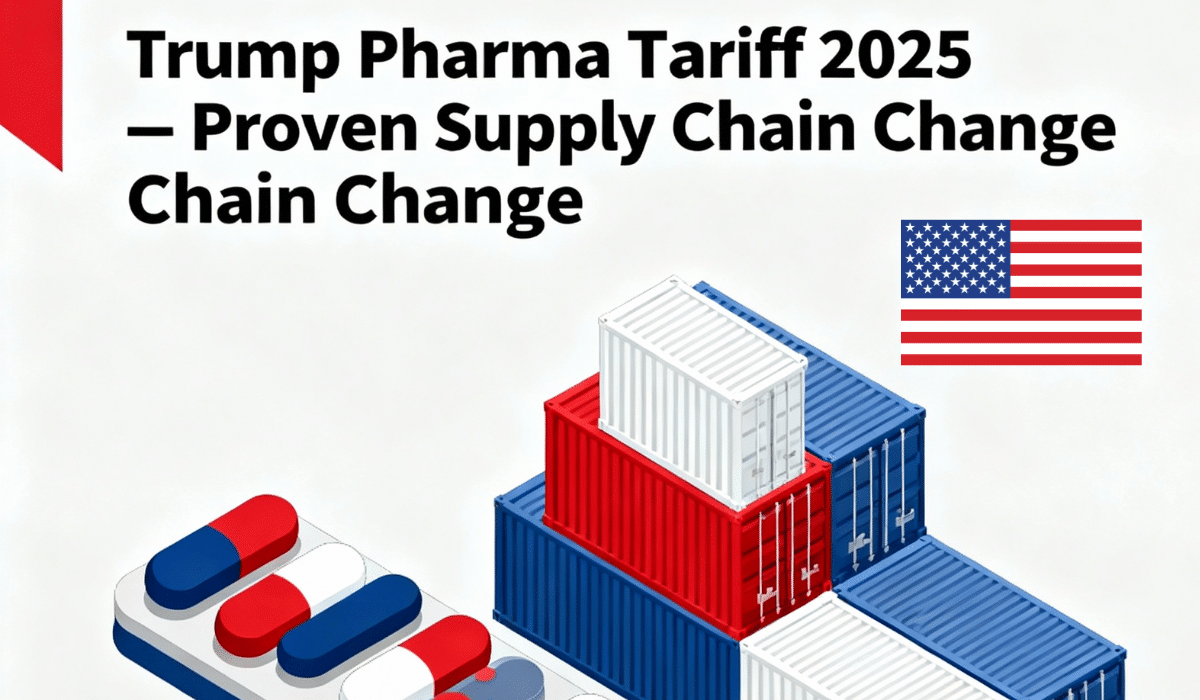
Trump Pharma Tariff will impact the world’s largest medicine market starting October 1, 2025. President Donald Trump has ordered a 100% import tax on branded and patented drugs unless the company is building a plant in the US. This move matters because it targets Indian and global drugmakers, could change prices for millions, and may lead to new supply chain challenges.
Key Points – At a Glance
- 100% tariff on branded and patented drug imports is set for October 1, 2025.
- Tariff does not apply to generics—yet—but uncertainty remains for specialty drugs.
- India exported $3.7 billion in pharma to the US in H1 2025; 40% of exports go to America.
- Only companies actively building US plants are exempt.
- Indian pharma stocks and global markets dropped sharply after announcement.
Table of Contents
What Is New: Trump Officially Announces Pharma Tariff
President Trump’s trade policy shift is the first major US drug import tax of its kind since 2017. The new measure covers only branded or patented medicines and excludes generics for now. However, future rule changes may threaten complex generics or high-value specialty drugs, an area where India is rapidly expanding.
The administration says the move will push companies like Pfizer, Eli Lilly, and major Indian drugmakers into building or expanding US factories. “IS BUILDING” is officially defined as “breaking ground” or actively under construction by October 1.
For more background on India’s strategic counters, read the detailed coverage at Trump tariffs India Modi first countermove
Impact on India: Indian Pharma Faces Uncertainty
Indian drugmakers like Dr. Reddy’s, Sun Pharma, Lupin, and Cipla earn up to half their revenue from the US market. Most Indian exports are generic formulations, which are currently exempt—but any tightening of rules may force even more companies to invest in the US.
Analysts warn that even a 50% tariff could reduce Indian pharma earnings by 5-10% in FY26, with higher tariffs risking further margin pressure. There is also concern about specialty generics and biosimilars, which may fall under future tariff rounds.
Pharmaceutical Supply Chain: Immediate Disruptions
The new US drug import tax will force many firms to rethink supply chains that rely on Indian, Chinese, and European ingredients. Pharma companies worldwide have already announced billions in new US manufacturing investments, but most new plants take 3-5 years to become operational.
If drug prices rise, US patients could face costlier branded treatments. Experts say generics, which cover 90% of US prescriptions but just 26% of spending, may fill gaps but cannot replace all affected medications.
Global Market Response: Stock and Industry Moves
Pharma stocks in India and Asia fell sharply after Trump’s announcement, as did related supply chain and logistics stocks. Major US and European drugmakers have pledged new US plant investments, but uncertainty remains for smaller firms lacking resources.
Industry lobbies are asking for phased tariffs and production grace periods, while supply chain experts warn of temporary shortages, price hikes, and regulatory bottlenecks.
Conclusion – Trump Pharma Tariff: Proven Supply Chain Impact
Trump Pharma Tariff is the most powerful supply chain shake-up for medicines in years. Indian pharma must act fast to stay competitive, while global patients and markets brace for change. Monitor official updates and invest strategically to avoid next-level tariffs. The latest strategic countermoves from India can be explored further on CricTechNow.
Frequently Asked Questions
Q1: What is Trump Pharma Tariff?
A: It’s a 100% import tax on branded and patented drugs entering the US unless the firm is actively building a manufacturing plant in America.
Q2: Are Indian generic drugs affected?
A: No, generic drugs are currently exempt, but future tariff changes could include complex generics or specialty medicines.
Q3: Who will benefit from this policy?
A: US-based manufacturers, construction and logistics companies, and multinational drug firms with active US expansion plans.
Q4: What do Indian pharma companies need to do?
A: Invest in US-based facilities or face steep tariffs on branded drug exports; monitor evolving US rules for generics.





November 20, 2025