
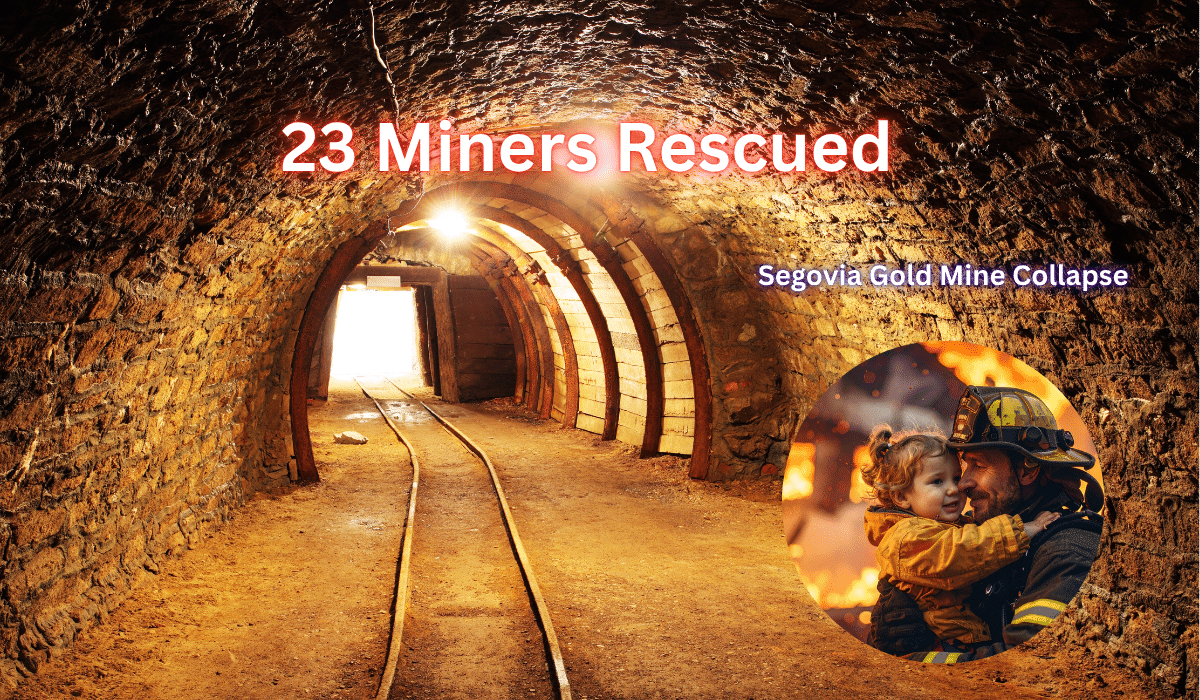
23 miners rescued Segovia gold mine collapse marks a dramatic conclusion to a tense emergency operation that unfolded at the La Reliquia mine in northern Colombia. The workers emerged alive on Wednesday after enduring 43 hours trapped underground following a catastrophic shaft access collapse on Monday, offering a glimmer of hope amid ongoing concerns about mining safety in the region.
The incident occurred at the La Reliquia mine, situated in the Antioquia region of Colombia, when a geomechanical failure caused the primary entrance to collapse without warning. Trapped 80 meters below ground, the 23 workers faced a desperate situation as rescue teams mobilized to extract them from the underground mine collapse. Among those trapped were five employees of Aris Mining Colombia, the Canadian company that owns the mining concession, who were conducting routine monthly operations review when the collapse happened.
Dramatic Rescue Operation Unfolds
The gold mine rescue operation became a harrowing 43-hour race against time as Colombia’s National Mining Agency coordinated extraction efforts with precision. Rescue crews established life-sustaining pipelines that delivered food, water, and ventilation to the trapped workers, maintaining their physical and mental resilience throughout the ordeal. The miners maintained communication with rescue teams and each other, preventing panic and preserving morale in complete darkness.
“We needed a lot of patience and faith in the rescue teams,” one rescued miner recounted. “We kept talking with each other so we wouldn’t feel stuck or panic. Everything was fine. We all managed to stay mentally strong.” This determination proved crucial as 43 hours trapped underground tested the psychological endurance of every worker.
Video footage released by authorities documented the emotional moment when miners emerged from the shaft, ascending the steep incline using ropes under their own strength. Families waiting above ground erupted in tears and applause as workers emerged mud-covered but alive, ending the tense vigil that had consumed the community for nearly two days.
Aris Mining’s Response and Segovia Operations
Aris Mining Colombia swiftly confirmed that all trapped workers had been safely extracted and accounted for. The company emphasized its role in providing essential supplies and supporting the rescue efforts throughout the crisis. While La Reliquia mine operates on land owned by Aris Mining, it is managed by a local mining cooperative, employing approximately 60 workers.
The La Reliquia mine represents only a small fraction of Aris Mining’s overall Segovia gold operation in the region. Aris Mining Colombia operates two main mining concessions in the country, which collectively produced approximately 6.6 tons of gold in the previous year. The company’s operations contribute significantly to Colombia’s mining sector, which reached 67 tons of annual gold production in 2024, buoyed by elevated international precious metal prices.
Broader Context of Mining Dangers in Antioquia
This rescue operation highlights the persistent dangers within Colombia’s Antioquia gold mining sector. The incident draws critical attention to safety protocols across the industry, where informal and unlicensed operations remain prevalent. According to a 2023 report from Colombia’s Human Rights Ombudsman, more than 80% of Colombia’s gold is extracted by informal operators, including artisanal miners and members of rebel factions, creating hazardous working conditions across the sector.
The underground mine collapse at La Reliquia underscores why comprehensive safety oversight remains essential. Just days before this incident, seven miners were discovered deceased at an illegal mine in Cauca province after rescue teams spent nine days attempting to reach them. Mining accidents claimed 124 lives in Colombia last year, making the 23 miners rescued from the Segovia facility a rare positive outcome in an industry fraught with danger.
Safety and Future Operations
Despite the ordeal, many miners have indicated their intention to return to work, citing the sector’s crucial importance to their families’ livelihood and local economies. Mining and hydrocarbon sectors account for half of Colombia’s legal export revenue, leaving workers with limited alternatives despite the inherent risks of underground mining operations.
Colombia’s National Mining Agency has launched investigations into the geomechanical failure that triggered the shaft access collapse. Authorities are examining whether improved safety protocols and monitoring systems could have prevented the incident, with implications for the entire Segovia gold operation and the broader Colombian mining industry.
The successful gold mine rescue operation demonstrates the effectiveness of coordinated emergency response, though it underscores the need for preventative measures that prioritize worker safety. As the mining sector remains vital to Colombia’s economy, ensuring adequate safety standards at all gold mining operations—particularly in Antioquia—remains imperative.
For more updates on major world news incidents and international developments, visit world-news category.






November 20, 2025