
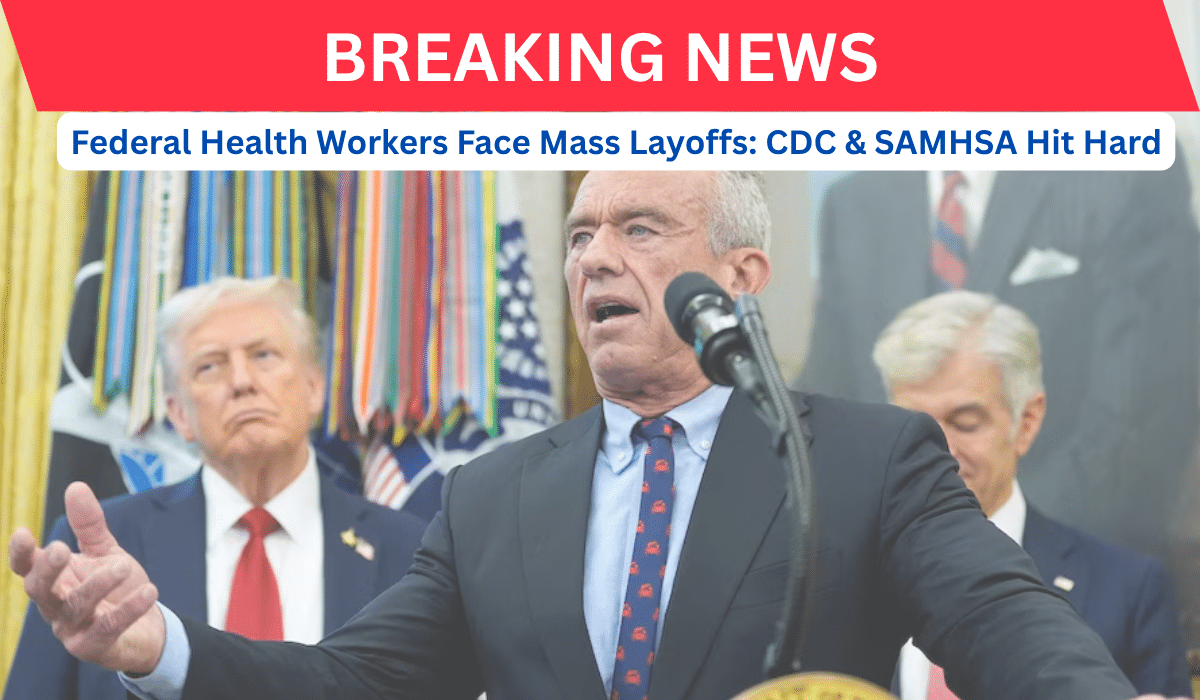
Federal health agency firings October 2025 have impacted hundreds of workers at critical disease control and mental health agencies during the second week of the government shutdown. The Trump administration RIF initiative targeted employees at the Centers for Disease Control and Prevention, Substance Abuse and Mental Health Services Administration, and biodefense departments over the weekend of October 11-13, 2025. The mass layoffs represent the largest single disruption to federal public health operations in recent history.
CDC Employee Terminations Reversed After Coding Error
The CDC employee terminations initially affected approximately 1,300 workers who received reduction-in-force notices late Friday, October 10. However, more than 700 of these notices were rescinded by Saturday morning after officials discovered what they called a “coding error” in job classifications. About 600 CDC workers remained terminated by Monday, creating chaos within the Atlanta-based health agency. The confusion led to widespread uncertainty among staff members about their employment status.
Health surveillance workers dismissed in the initial wave included disease detectives from the Epidemic Intelligence Service, editors of the Morbidity and Mortality Weekly Report, the entire Washington DC office staff, and officials handling measles and Ebola outbreak responses. The unprecedented action disrupted critical public health monitoring functions during active disease outbreaks across the United States. Disease detectives who typically deploy to handle dangerous infectious disease outbreaks now face job insecurity from their own government rather than just from the pathogens they study.
Mental Health Workers Fired at SAMHSA
SAMHSA staff layoffs hit particularly hard, with more than 100 employees losing their jobs across multiple departments. Mental health workers fired included personnel from the Office of Communications and the Center for Mental Health Services, where one entire branch overseeing millions in grants for community health clinics was mostly terminated. The cuts affected staff who coordinate critical programs serving Americans struggling with mental health challenges and substance abuse disorders.
The agency, which oversees the 988 suicide prevention hotline and distributes billions in mental health and addiction grants, had already lost roughly one-third of its 900-person workforce in earlier spring layoffs. This latest round of disease control job cuts raised serious concerns about the agency’s ability to fulfill its congressional mandate to provide mental health and addiction services to vulnerable populations. Experts warn that disruptions to grant oversight could affect thousands of community health centers nationwide.
HHS Workforce Reduction Affects Multiple Agencies
The HHS workforce reduction came just six months after the Department of Health and Human Services underwent an earlier round of cuts that eliminated more than 2,000 positions. According to a court filing, approximately 1,100 to 1,200 of HHS’s nearly 80,000 employees received dismissal notices in this latest round of federal health agency firings October 2025. The timing during a government shutdown added legal complications to the layoff process.
Biodefense staff cuts also affected the Administration for Strategic Preparedness and Response (ASPR), which handles disaster preparedness and pandemic response coordination. The federal government shutdown impact extended across seven federal agencies, with an estimated 4,200 workers receiving layoff notices by Friday. Treasury Department and State Department also experienced significant workforce reductions during the same period.
Public Health Agency Downsizing Sparks Legal Challenge
The public health agency downsizing drew sharp criticism from health professionals, labor unions, and public health experts. The American Federation of Government Employees called the actions a “politically-motivated stunt” and filed lawsuits challenging the legality of conducting layoffs during a government shutdown. Union representatives argued that federal law prohibits such workforce reductions when agencies lack appropriated funding.
Former CDC principal deputy director Dr. Anne Schuchat expressed grave concern about the impact on epidemic response capabilities. She noted that disease detectives who are deployed to handle dangerous outbreaks should not have to worry about pink slips from Washington. Public health organizations warned that the CDC employee terminations could weaken America’s ability to detect and respond to emerging infectious disease threats.
Administration Defends Cuts as Necessary Reform
HHS spokesperson Andrew Nixon defended the cuts, stating the laid-off employees were deemed nonessential and part of efforts to close “wasteful and duplicative entities” at odds with the administration’s health agenda. The administration argued that streamlining federal health agencies would improve efficiency and reduce taxpayer burden. Officials maintained that essential health services would continue despite the workforce reductions.
However, health experts warned that these federal health agency firings October 2025 could negatively impact disease surveillance, outbreak response, and mental health services nationwide. The SAMHSA staff layoffs particularly concerned addiction treatment advocates who pointed out that the opioid crisis continues to claim tens of thousands of American lives annually. Mental health workers fired had been coordinating critical suicide prevention programs and substance abuse treatment grants.
The situation remains fluid as the government shutdown enters its second week, with additional layoffs expected across federal agencies. Congressional negotiations to end the shutdown have stalled, with no clear resolution in sight. The federal government shutdown impact on public health operations continues to grow as critical positions remain unfilled and terminated workers seek new employment.





November 20, 2025